"You are not a drop in the ocean, you are the ocean in a drop." ~ Rumi
![]() |
| Photo by Salah Darwish on Unsplash |
Live as if you were to die tomorrow. Learn as if you were to live forever. - Gandhi There is no one alive who is you-er than you ~ Dr. Suess
A collection of memoirs, musings and lessons as I go through life. A compilation of notes to self, a dossier documenting experiences in this...
![]() |
| Photo by Salah Darwish on Unsplash |
Tradition is hard to break for the Chinese.
You can take a Chinese out of China but you can’t take China out of the Chinese. The reason is simply because our culture is very much rooted in the tradition of the old, even ancient, Chinese practices handed down from dynasties, generations, communities and family units mainly from accepting the proven teachings of Confucius, Lao Tzu and Buddha since the Qin Dynasty.
Depending on how devoted your parents were you’d have been exposed to a lot or a little of the Chinese tradition. There are many rituals rooted in traditions practiced by my family since I was young and I sometimes wish I could relive some of them again especially the more happy and auspicious rituals like;
![]() |
| Pai Tee Kong |
1. Pai Tee Kong on the eve of Chinese New Year.
A prayer table set up on the eve of Chinese New Year at midnight with offerings of fruits, food, joss sticks, candles & paper gold bars. Followed by a string of firecrackers to welcome the new year and scare away monster ‘nien’ at the end of it. The fun part is felt throughout the day when each member of the family is engaged in some form of last minute chore or errand somewhere inside, outside or out of the house. There's never so much hullabaloo any other time of the year than the eve of CNY. As a child, I would thoroughly enjoy the mayhem from the kitchen to the front door prancing out to the garden, adding to the physical and imaginary stress by making mischief all over the house. Tempers would flare as time and fuses are short and the day is long till way past midnight.
As midnight approaches, the tables spread wide and deep with fully prepared dishes of all kinds covering all meat, poultry, fish and fresh greens of the auspicious kind that can be acquired from all means near or far. It is a feast fit for a king - the king of heaven. What a spread my mother cooked up. She slaved in the kitchen all day, all night and into the morning just to uphold a tradition. How she did it, I don't know but I know she did it out of the immense love in her heart coupled with the fact that she was also a Nyonya of noble birth. Which is always a sure sign the food will be meticulously prepared to guarantee that exquisite taste in every dish.
Wouldn't it be a good thing to preserve that tradition just to keep that memory alive at the same time revel in performing the rituals practiced by our ancestors for centuries with pride and love in our hearts just like how my mother has done.
![]() |
| Jade Emperor's Birthday |
![]() |
| Fire offerings to the Fire Horse |
2. Tee Kong See or The Jade Emperor's birthday - 9th Day
The eve of the ninth day of CNY a table set up with offerings of fruits and food, simple or elaborate to celebrate the Hokkien New Year.
Joss sticks, candles, paper gold bars and other effigies are burnt as well. Then the burning of firecrackers that even rivals the first day. Significant for this particular celebration is the presence of sugar cane stalks to honour the sugar cane plantations that helped hide the Chinese from the Japanese during the war until their liberation of the ninth day.
This was another day on the CNY calendar to stay up late and celebrate what is probably the most significant day for our clan- the liberation of the Hokkiens from occupied forces to be able to finally celebrate our New Year on the ninth day. And the Hokkiens make it even grander and louder on the ninth day than the actual first day praying and partying at midnight the night before.
3. Mee Sua soup with hard boiled eggs on birthday mornings.
This simple ritual has been practiced by my parents since childhood. We didn’t have that as it wasn’t any of our birthdays but we had a special version of Mee Sua prepared with abalone and dried scallops for CNY after the prayers past midnight that night.
![]() |
| CNY Reunion Dinner spread |
4. Chinese New Year's Eve Family Reunion Dinner.
Of all the worldly traditions imposed upon ourselves throughout the centuries, I hold that the tradition of family reunion dinner as the most important.
So technically we had a big family reunion dinner in Tampin on the eve, then again on New Year's day past midnight in Port Dickson after prayers, just the three of us. We continued spending time together and partying till the early hours.
The rest of the New Year was spent just lounging around like lizards on the ceiling and the trees. Blissful were the days and nights spent doing absolutely nothing except eat, drink, talk, listen to music, to nature, to each other, to just chill, rejuvenate and sleep.
Happy Chinese New Year to you all.
Xin Nian Kuai Le'
![]() |
| Image by ChatGPT |
![]() |
| Photo by Ksenia Makagonova on Unsplash |
Teacher death met up with us the minute we were born, and is by our side every moment of our life. What death has to teach us is direct and to the point. It is profound but intimate. Death is a full stop. It interrupts the delusions and habits of thought that entrap us in small-mindedness. It is an affront to ego.
Death is a fact. Our challenge is to figure out how to deal with it, because it is never a good plan to struggle against or deny reality. The more we struggle against death, the more resentment we have and the more we suffer. We take a painful situation and through our struggles add a whole new layer of pain to it.
We cannot avoid death, but we can change how we relate to it. We can take death as a teacher and see what we can learn from it.
By means of meditation and by developing an ongoing awareness of death, we can change our relationship with death and thereby change our relationship with life. We can see that death is not just something that pops up at the end of life, but is inseparably linked with our life moment to moment, from the beginning to the end. We can see that death is not just a final teacher. It is available to teach us here and now.
When we contemplate in this way, our many schemes for getting around the reality of death, such as coming up with interpretations to make it more palatable, are exposed one by one and demolished. Death is the great interrupter, unreasonable and nonnegotiable. No amount of cleverness will make it otherwise.
Contemplating death is not an easy practice. It is not merely conceptual. It stirs things up. It evokes emotions of love, sorrow, fear, and longing. It brings up anger, disappointment, regret, and groundlessness. How tender it is to reflect on the many losses we have experienced and will experience in the future. How poignant it is to reflect on life’s fleeting quality.
You could say that death is your most intimate partner. It is with you all the time, completely interwoven into your daily activities. Since that is the case, wouldn’t it be worthwhile to make a relationship with it?
Contemplative practice challenges us to look deeply into our thoughts and beliefs, our fantasies and presumptions, and our hopes and fears. It challenges us to separate what we have been told from what we ourselves think and experience. We have all kinds of thoughts about what happens when we die and how we and others should relate with death, but through meditation we learn to recognize thoughts as thoughts. We learn not to mistake these thoughts and ideas about death for direct knowledge or experience. We learn not to believe everything we think or everything we have been told.
We can begin our exploration right where we are. We have already been born, we are alive, and we have not yet died. Now what? We might connect to our life in terms of a story or a history. For instance, we were born in such and such a time and place, we did this and that, and we have a particular label and identity. But that story is always changing and in process; it is not all that reliable. However, when our story is combined with a physical body, we seem to have something more solid, a complete package. We have something to hang onto and defend. We have something that can be taken away.
But what do we have to hang onto, really? Our story is not that solid. It is always being revised and rewritten. Likewise, our body is not one solid continuous thing. It too is always changing. If you look for the one body that is you, you cannot find it.
The closer you look, the less solid this whole thing seems. When we investigate our actual experience, here and now, moment by moment, we see how fleeting and dynamic it is. As soon as we notice a thought, feeling, or sensation, it has already happened. Poof! It is the same with the act of noticing. Poof! Gone! And the noticer, the one who is noticing, is nowhere to be found. Poof! When we contemplate in this way, we begin to suspect that this life is not all that solid—that we are not all that solid.
The more solidly we construct ourselves, and the more rigidly we identify with this construct, the more we have to defend and the more we have to fear. Looking at death in terms of such subtle underlying patterns may seem inconsequential, but it is not.
When we drop the battlefield approach—that life and death are enemies—we become open to an entirely new way of viewing things. Instead of this vs. that, us vs. them, something much more inspiring can take place. Experiences can arise freshly because they are immediately let go. Because they are dropped as soon as they arise, there is nothing to hold onto and nothing to lose. There is no battlefield, no winner and loser, no good guy and bad guy.
Simple formless meditation is a very powerful tool for relaxing this pattern of holding and defending. Working with death through our awareness of momentary arisings and dissolvings is a profound practice. It shows us that the life–death boundary is an ongoing and quite ordinary experience, and that this unsettling meeting point colors all that we do. If we can become more grounded at this level, we can become more open to what death has to teach us altogether.
Although death is an ongoing reality, there are times when it hits us particularly hard. It may be when we have a health scare or a near accident. At such times, we really wake up to the presence of death, and its teachings come through loud and clear. The heart pounds, the senses are heightened, and we feel extra alive. There is a stillness, as though time had stopped.
Maintaining an awareness of death makes life more vivid. In the light of death, petty concerns fall away and our usual preoccupations become meaningless. It is as though clouds of dust that have covered over something shiny and vivid have been blown away, and we are left with something raw, immediate, and beautiful. We have insight into what matters and what does not.
Awareness of death—hearing its teaching—cuts through the subtle clinging at the core of our experience. It cuts through our self-clinging and our clinging to others. This may sound harsh, but all that clinging has not really helped us or anyone else. Our clinging to others may have the appearance of real caring, but it is based on fear and an attempt to freeze and control life. It is a way of tuning out death and pulling back from the intensity of life. But if we develop more ease with our own impermanence and struggles with death, we can be more understanding of others and their struggles. We can connect with one another with greater genuineness and warmth.
Death turns out to be the teacher who releases us from fear. It’s the teacher that opens our hearts to a more free-flowing love and appreciation for life and one another. When we get stuck in self-importance and earnestness, death steps in. When we get caught in self-pity, death steps in. When we become complacent and take things for granted, death steps in.
Death spurs us forward with a sense of urgency and puts our preoccupations in perspective. Death lightens our clinging and mocks our pretensions.
Death wakes us up. It is our most reliable teacher and most constant companion.
~ Judy Leif
~ In Loving Memory of Brother JOHNNY GAN (10 Jan 1948 - 14 Jan 2026) ~
![]() |
| PY, JG, PG |
One week after my brother was laid to rest, I decided to post a very well written piece on Life and Death by Judy Leif to accompany this 'eulogy' of sorts.
I got to know of my step-brother from a very young age- 5 or 6 I believe. With an age gap of 10 years, we weren't exactly best of friends. In fact it was quite the opposite. He often saw me as a threat to his status of No. 1 son as I was the legitimate son born out of wedlock while he was legally adopted. There were times when I felt his anger and wrath in the thick of passion in hockey practice or playing childhood games. He would erupt in violent verbal threats warning me to beware or to watch-out. I felt his misplaced animosity as strange as I've often wondered how little old me could be a threat to my big brother. I had no interest in being No.1 son. So I took all of his occasional jibes lightly but I was always respectful except when I would secretly and silently 'borrow' his Yamaha 125cc motorcycle for fun runs in the countryside sans helmet or license. Although he knew what I was doing with his bike, he often turned a blind eye and let me have my fun. That was how I fell in love with motorcycle riding and big bike ownership to this day.
Johnny was a solidly competent field hockey fullback who played for school, district and state. He inspired all of us to play the sport as family tradition. I initially played the position of full-back because of him although later in my career, I moved up to play attacking half. I didn't have the bulk to be a mountain of a full back like him. I was to play quick and nimble roles in attack and defence and I thoroughly enjoyed it.
"He took us butterfly hunting while we were barely knee-high to a grasshopper."
One other gift he gave to us was the beautiful exposure to nature in the rainforest and hills that surrounded our homes. He took us butterfly hunting while we were barely knee-high to a grasshopper. The jungle paths, streams and waterfalls that we traversed for hours were terrifying at first but became beautifully engrained in us as we grew up appreciating nature and her beauty. Although I never acquired the deft skill of catching many butterflies nor putting them to sleep with formaldehyde or pinning the beautiful specimens into beautiful glass-frames of various shapes and sizes for sale to collectors in the British expatriate community, I got to go on unforgettable jungle adventures.
Johnny was also one of the most hard-working people I know. Both physically and mentally.
Apart from his sportsmanship, he was a hardworking ace student in the Sciences. I remember the day he was refused an engineering place in UKM despite several attempts, he was heart-broken.
He was a human dynamo when it came to performing household chores and climbing trees. He had several skills and methods devised to clear mountain loads of chores with ease. We of course struggled to keep up with chores of raking leaves, cutting grass, trimming the hedges or feeding the dogs and poultry. All of which were performed meticulously and diligently by my big brother. He never belittled or berated us for failing at anything he could do when we fell short. We were short compared to him in the first place.
Perhaps the best memory I have of my big brother's role in my life was the fact that he stood by my family and I, when we were enduring a grievous period of caring for Jon when he fell ill. Johnny and his family were constantly present to lend us unconditional support. I remember clearly, one night when Jon was lying in bed with no improvement, our family was crestfallen watching our son helplessly wasting away and I was clearly buckling under the weight of worry and anguish with no hope in sight. I slipped away silently to the balcony to be alone with my grief. Johnny noticed and came out to comfort me. For the first time, that night I cried like a baby comforted by my brother, his hand on my shoulder. I never felt so understood and loved by my brother as I did then.
As I stood over his casket on the first day of his wake, all the thoughts and feelings suddenly came flooding back and I bawled my eyes out in his presence once again. Once again he gave me permission to grieve. Deeply.
Thank you dear brother Johnny. I love you and I will miss you dearly.
Farewell for now.
![]() |
| Image by PineForest & AI |
If one were to use just one word to describe Americans, it would be talent.
That ineffable ability to astonish, entrance, enchant, entertain, excite, and amuse audiences globally and God knows where else.
Americans, having evolved from what is arguably the world’s largest human laboratory, have shown us what humans are capable of: not only in the creation of stories and myths across print, film, digital, and live formats, but in the advancement of technologies that allow us to actively participate in those stories rather than merely spectate. And we are still only at the beginning of this unfolding.
Yet, among a nation so rich in talent, how did they end up being ruled by the least talented of them?
Or is he?
One simplistic way to look at it is this: there is no universal yardstick for talent. It is notoriously hard to define, and it is often said that everyone is talented in some way.
Donald Trump has audacity and ambition, fuelled by an unrelenting will and determination to win. That, in itself, is a form of talent. Is it not?
Hard work often masquerades as talent.
Besides, who wakes up one morning, decides he wants to be President of the United States, and then becomes one - not once, but twice? Like the frog who dreamt he’d be king and then became one. It happens. Or so it seems.
But let us ask a simpler question: is Donald J. Trump really happy, healthy, and enjoying every moment of his life? Maybe. Maybe not. Based on observation alone, he neither looks nor sounds particularly happy or healthy, nor as though he is enjoying himself at all. How could anyone be, whose daily mission appears to be hurling insults and making enemies of virtually everyone?
So what is he getting out of this - apart from money?
How much money is worth the daily physical, mental, and emotional assault on one’s senses—and on ours?
What gets him out of bed every morning and back into it every night?
How does he cope with the pressures of the job while simultaneously being a husband, a father, a man, a human being and a deeply polarising figure? How does his mind operate? What compels a sitting president to effectively tell the member nations of the UN General Assembly to go to hell?
Power.
He believes the United States is the most powerful nation on Earth; and he lacks the vocabulary, or perhaps the inclination, to say it in softer terms. The kind the left, and much of the rest of the world, have grown accustomed to.
“Nice words are not truthful. Truthful words are not nice.”
~ Tao Te Ching
At least this lesser-talented American is upfront about his excesses, his transgressions, and his appetites for power. American politicians have acted with impunity for decades. The difference now is that this reality is visible to more people around the world.
The best actors are among the most talented people on Earth. They can continue performing convincingly, protected by how persuasive their acting is. Donald J. Trump, however, seems to be cracking on openly - creating headlines, enemies, and spectacles in equal measure. Perhaps he is talented after all. Perhaps he is simply a different kind of actor.
Best or worst, it is still acting to a familiar script; one handed down from previous presidents, played out like well-worn Hollywood blockbuster sequels that refuse to die.
America is no danger to the world.
But the world may yet become a danger to America if this man persists in pursuing a personal, divisive agenda that confuses power with purpose and spectacle with leadership.
2025 has been witness to multiple launches of AI agents, personal assistants, applications, and tools increasingly integrated into daily life with constant, often invisible presence across various environments.
Yes. They have become pervasive, personal, predictive, and ubiquitous.Dear Zane,
I apologise for posting this late but it was intentional as I had gone for a 10-day Vipassana Meditation Retreat somewhere in the rainforests of Pahang. Those ten days of physical and digital detox with no devices, no books, no writing, no talking, started on 15 Oct. ended on the 26th. I have had a most amazing, life changing experience, uplifting my sanity many notches and it is on this note that I would like to address you.
You know son, over the years, I have been watching you in silent admiration, rooting for you, celebrating with you, delighting in your successes and conquests. I am so proud of what I have seen in your achievements thus far. The more I see the joy on your face and in your demeanor, the more I am happy to be out of the orbit of your life. After all, I have consoled myself that, most of all I have to impart to you as father to son, I have already done so, for better or for worse. The rest was up to you and you have done well. And that is just the beginning.
Remember to play the long game, anyone can start but it takes commitment and endurance to succeed. But then you already know that-it's etched into your arm as your first tattoo. I’m not about to give you advice and neither did my father give me any advice (although I wished he had) but all I want to say is; spend some quiet time (start with 10 mins) with yourself in silence and solitude everyday. That’s all.
Happy Birthday dude.
Be Well. Be Happy.
With love;
Papa xx
![]() |
| Not too long ago in the last century. |
![]() |
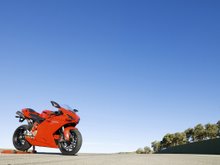
| Astride the factory racer- Ducati Desmosedici 999 |
![]() |
| At the Istana for Matah Ati. |
![]() |
| Clubbing at 21 (with Parents) |
![]() | ||
A Ballerina fr. KL wins 1st Prize in Barcelona.
|
![]() |
| To New York City. |
![]() |
| NYC Brands |
![]() |
| NYC Brats |
Dear Summer,
All offsprings are gems and crowning glory of our lives.
Our family's blessings came in delightful bundles of joy in quick succession. The ending of the twentieth century brought us great bounty and gifts from the divine.
Being the youngest and a precious baby girl at that, you came with special blessings right from the day you were born.
" To be a constant source of light & joy for all of us completing the circle that would bind us all together forever."
It’s been three decades since and I think I know that you’re still the constant source of light and joy for the family. And I.
I can’t imagine how you look right now but I surmise you look no different from when you were 21? And you will forever be 21 in my eyes and in my heart. That was the day when I saw how you’ve grown into a confident, capable, independent, and compassionate young woman on your 21st birthday party.
It is one of the most memorable moments in my life. Seeing how you so maturely gave-in to your uncontrollably ‘proud’ father (who insisted on a blindfold gambit) & then you nicely wrapped it up in a poised delivery of your birthday speech. Everyone present was convinced you had come of age then. Especially me.
Along with all the many birthdays we celebrated with you and all the birthdays we celebrated for Jon, Zane and Mum. I’m glad I had my fair share of precious & beautiful memories of and with you, on your birthdays as well as your brothers and mother. I must say that I truly enjoyed fatherhood. It was more than I could ever wish for, but birthdays are just that, another excuse to celebrate this ephemeral life and if for any reason that we are unable to meet again, remember to celebrate life every chance you get, I would have no regrets, I have had many beautiful & precious memories of you, with you as well as the whole family to last several lifetimes & beyond.
I just want to wish you a Happy Birthday filled with happiness and wellness always.
I celebrate you each time I think of you. Always light & joy.
With Love;
Pxxa
We reached a crossroads.
Clients began asking for faster turnarounds, cheaper fees, and "Al-powered strategy".
Competitors were shipping decks in days. Some in hours.